Results & Analysis
Reading the NPS Score Card with Promoter and Detractor Segments
Read your NPS card — the headline score plus the promoter, passive, and detractor split behind it.
Overview
Read your NPS card — the headline score plus the promoter, passive, and detractor split behind it. The segments matter more than the single number.
Step-by-step
Open the Results tab and find your NPS question card.
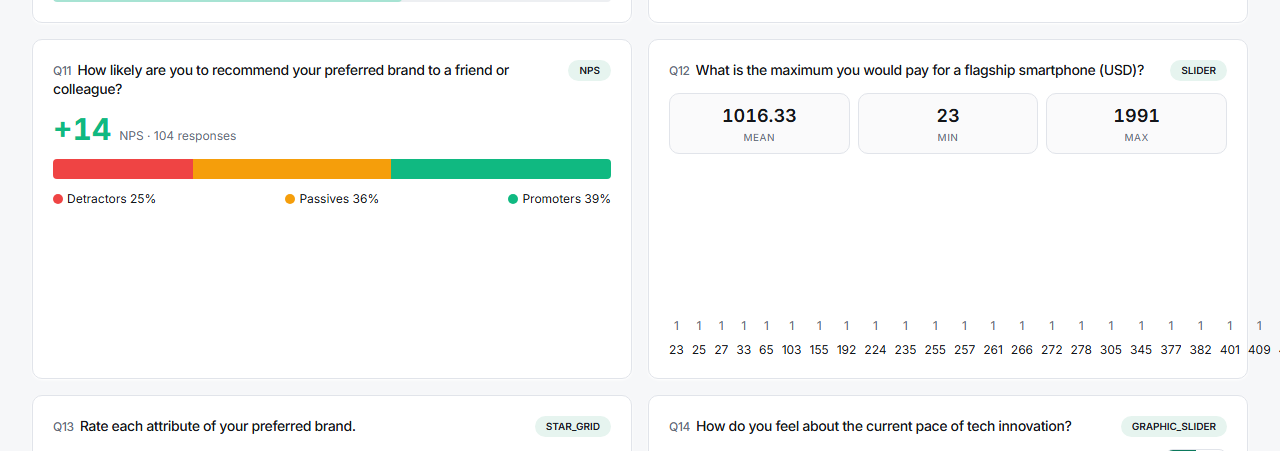
Read the headline score — the large number (e.g. +14) is your Net Promoter Score, with the response count beside it.
Read the segment bar — the coloured bar splits your respondents into Detractors, Passives, and Promoters, each with its percentage.
Interpret the mix, not just the score — in the example, +14 comes from 39% promoters minus 25% detractors, with 36% passive. Two surveys can share a score with very different mixes.
Key options
| Segment | Score range | Meaning |
|---|---|---|
| Detractors | 0–6 | Unhappy; may discourage others |
| Passives | 7–8 | Satisfied but unenthusiastic |
| Promoters | 9–10 | Loyal enthusiasts |
Tips
Tip: Watch the segments over time, not the headline. A score that holds steady while detractors grow and promoters shrink is a warning the single number hides.
Note: Passives count toward your base but not the score — they drag NPS down only by diluting the promoter share. A big passive block means "fine, not loved".
Related articles
- How the Net Promoter Score Is Calculated from Survey Responses — the arithmetic
- Setting Up a Net Promoter Score Question — asking the question